Cloth & details / Tailoring
The London Bespoke Club · Toronto5 min read
From the Journal
The shirt beneath it all.
A collar for your favourite tie. Cuffs that fit your watch. Personal details with a story to tell.
At a glance
- Start with how you wear your shirts: with a tie, open beneath a jacket, or on their own.
- Choose the collar and tie knot together. Cuffs, watch allowance and embroidery make the shirt more personal.
- Made-to-measure starts at $250 per shirt, with a minimum of three shirts per order. Allow approximately 4–5 weeks.
In this story
A collar that feels tight by lunchtime. Sleeves that disappear beneath your jacket. Too much cloth at the waist, yet not enough room across the shoulders. These are useful starting points for a custom shirt.
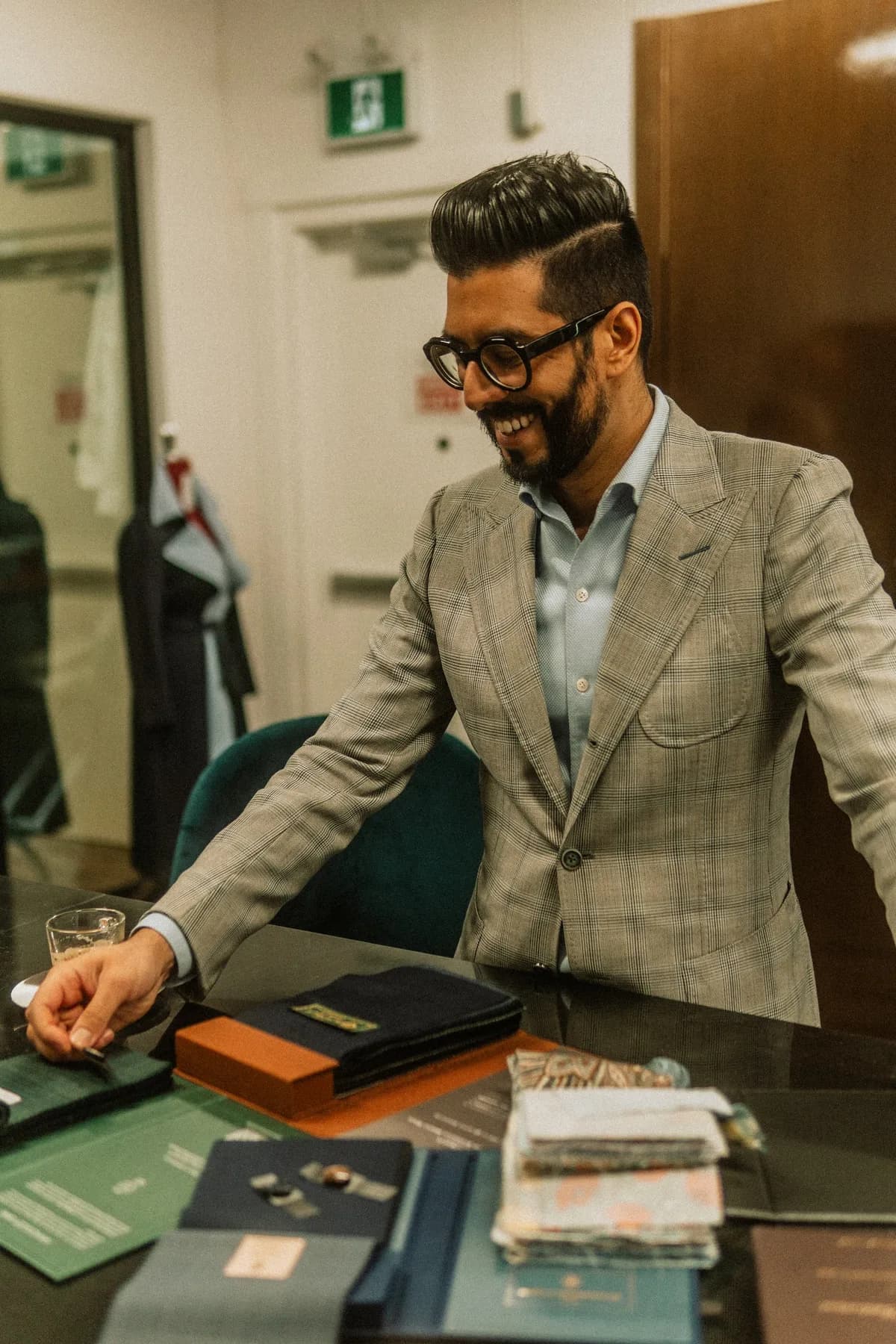
At our Toronto atelier, we begin with what you wear and what you would like to improve. Then we work through the cloth, collar, cuffs and any personal details. You don’t need to arrive knowing the names of every weave or collar shape.
Start with fit you can move in
A good fit should feel comfortable sitting at a desk, reaching forward or putting on a jacket. Pulling across the chest, a collar that presses against your neck and cuffs that catch on your watch all deserve attention.
We look at your posture, shoulder position, sleeve length and the room you prefer through the body. A shirt worn tucked in needs enough length to stay put. One intended for weekends may call for a shorter hem and a little more ease.
Bring a favourite shirt, even if the fit isn’t quite right. Showing us what you like about it is often the easiest way to begin.
Choose cloth for your week
Colour is only part of the choice. Feel the cloth, hold it to the light and consider how much pressing you are happy to do. A fine, light cotton can feel wonderful, but it may show more through it than you expect.
Our shirting library includes Thomas Mason, Alumo and Canclini. Within those books, these are useful places to start:
- Poplin: a smooth, crisp surface for a clean business shirt. Check the weight and opacity, particularly in white.
- Twill: a diagonal weave with a softer drape. A useful everyday option if you prefer a little more body.
- Oxford: visible texture and a more relaxed character. A natural starting point for button-down collars and casual shirts.
- Linen or a linen blend: an easy choice for warmer days, if you enjoy the creases that come with it.
Choose your collar with your tie
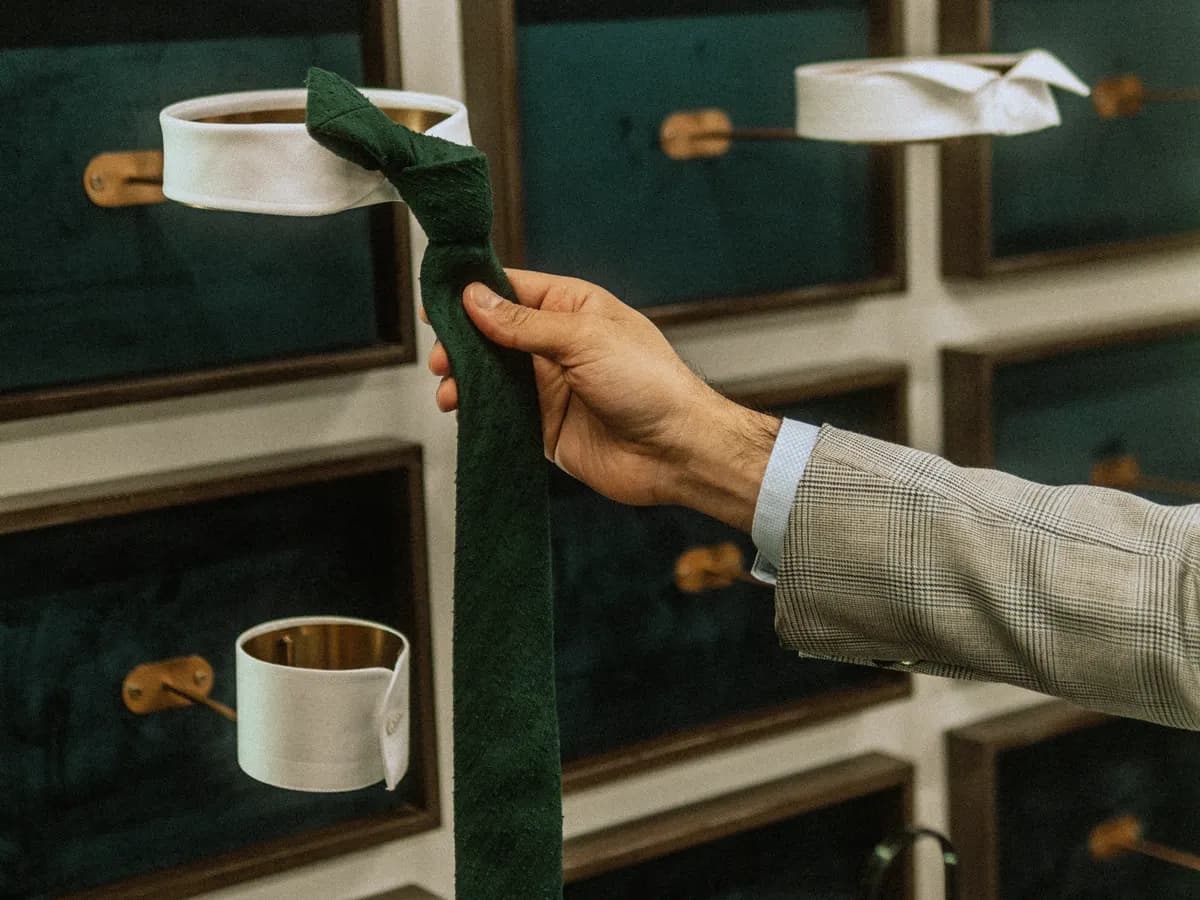
The space between the collar points helps determine which tie knot will look balanced. Start with the collar you like, then try it with a tie you actually wear.
- Point or narrower collar: try a four-in-hand. Its compact, slightly asymmetrical shape sits comfortably within a smaller opening.
- Moderate spread: a four-in-hand or half Windsor is a useful starting point. Compare them with the tie and jacket together.
- Wide spread or cutaway: there is room for a fuller knot, such as a half or full Windsor. A larger knot is an option, not a requirement.
The tie itself changes the result
The same knot looks different in a fine silk tie and a thick knitted one. Cloth and lining affect its bulk, so a four-in-hand may already give you all the fullness you need. The knot should sit neatly beneath the collar without pushing the points up.
If you usually go without a tie, tell us. We’ll consider the collar’s height, softness and how it sits open under a jacket. Bring that jacket to your consultation too; it helps us see the proportions together.
Cuffs that work with your watch
A buttoned barrel cuff is straightforward for everyday wear. Rounded corners give it a softer line; a mitred corner looks a little sharper. French cuffs fold back and fasten with cufflinks, making them a good choice when you enjoy that extra detail.
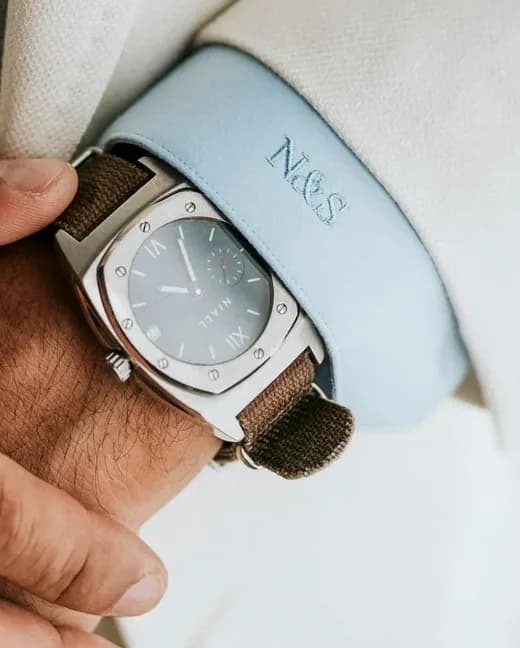
Wear your usual watch to the appointment. The cuff needs enough room to pass over it comfortably, and that may mean a different allowance on each wrist. We also check the sleeve alongside your jacket so the amount of cuff showing feels right.
Monograms, and the stories beyond initials
Initials can be discreet: close to the colour of the cloth, tucked inside a cuff or placed where only you notice them. They can also have more presence, with contrasting thread or a lettering style that feels like yours.
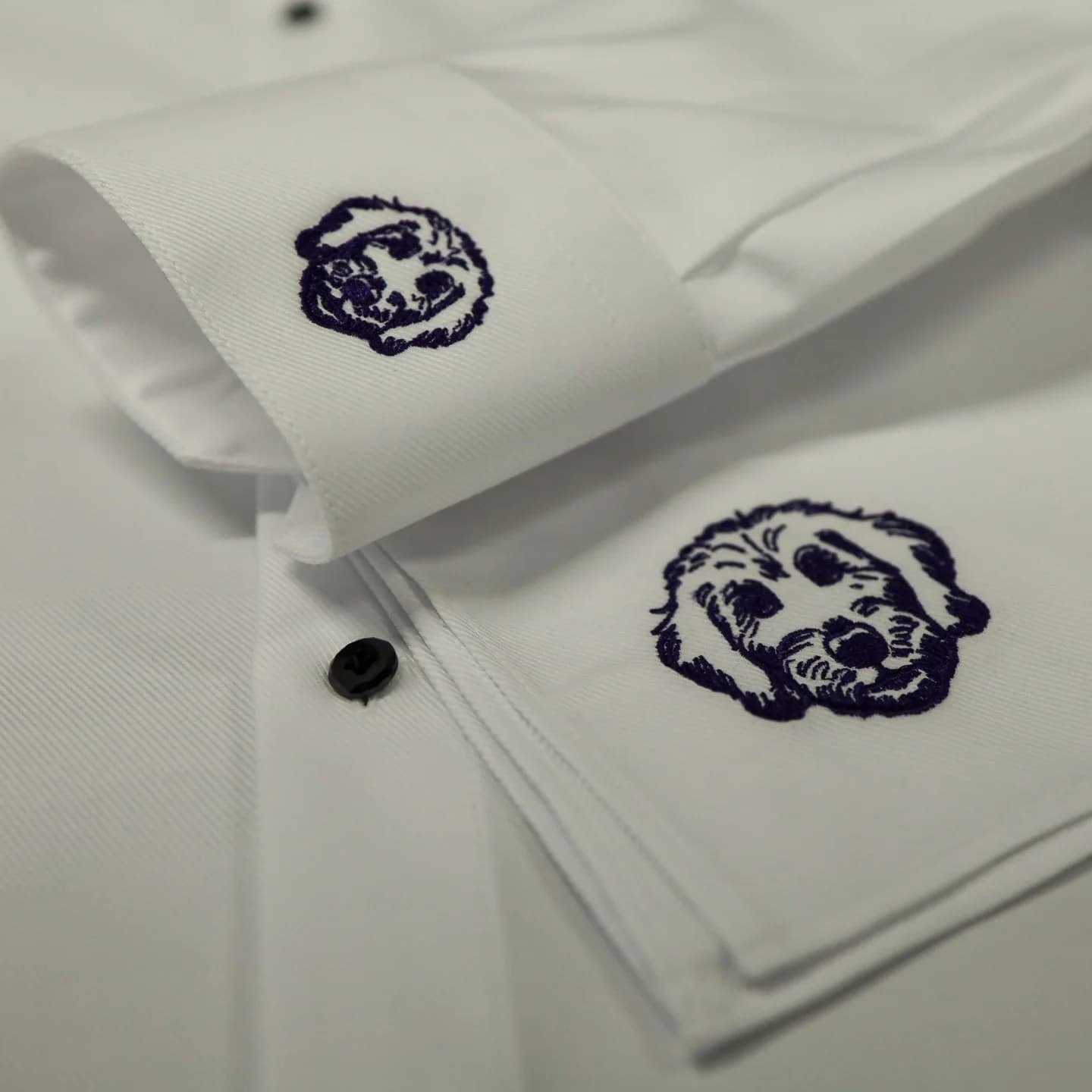
We’ve taken that idea beyond lettering. One client wanted his family pet to be part of his wedding day, so we embroidered the pet’s face on his shirt sleeve and pocket square. A small detail, with a very personal reason behind it.
If you have a sketch, a meaningful symbol or an idea for a custom monogram, bring it along. We’ll discuss the scale, placement, thread colour and what will translate well into embroidery, then confirm the cost before you decide.
Planning your first order
Our men’s made-to-measure shirts start at $250 each, with a minimum of three shirts per order. We adapt an existing pattern to your measurements and fit preferences. Fully handmade bespoke shirting starts at $600, with an individually cut pattern and handwork through the collar, yoke and finishing.
For a first rotation, white, pale blue and a stripe make a useful starting point if you wear suits regularly. If your week is more casual, choose cloth and collars to suit that instead. There is no need to order three versions of a shirt you rarely wear.
Allow approximately 4–5 weeks from cloth selection to collection. Tell us about any event date at the outset, so we can confirm timing before you commission. Final pricing depends on the cloth and details you choose.
Bring a shirt. And a few ideas.
For your first consultation, bring a shirt you like, your usual watch, and a tie or jacket you wear often. If you have an embroidery idea, a photograph or sketch is helpful too.
We’ll go through the choices with you at 146 Yonge Street, 2nd Floor, Toronto, ON, M5C 1X6. Consultations are complimentary and strictly by appointment.
Book your shirting consultation