Womenswear / Tailoring
The London Bespoke Club · Toronto5 min read
From the Journal
Women’s bespoke suits. On your terms.
Start with what you enjoy wearing. We’ll talk through the shape, cloth and details, with room to work things out at the fittings.
At a glance
- Start with how you want to wear the suit. A trouser suit, a skirt suit or a single jacket can all be useful starting points.
- Tell us what feels comfortable and what bothers you about your current clothes. Your individual pattern and fittings let us work through those details.
- Discuss your budget and timing early. Our dedicated womenswear team will help you choose the cloth, shape and making process.
In this story
The first thing I’d ask is where you see yourself wearing it. That tells us far more than starting with a row of fabric books. You might need a suit for work, have an occasion coming up, or simply want a jacket you enjoy putting on.
Then tell us what you like about your clothes, and what you’re always adjusting. A waistband that digs in when you sit. Sleeves you keep pushing up. A jacket that fits at the bust but feels loose everywhere else. Those are useful things for us to know.
Start with your wardrobe
Think about what you’ll wear with it. If you live in flat shoes and fine knitwear, we should be considering those from the start. If you want the jacket to work with jeans as well as the matching trousers, tell us. A skirt suit is an option too; there’s no reason to default to trousers if you prefer a skirt.
My advice is the same as it is for anyone buying their first suit: shop for longevity. It’s easy to get carried away with the cloth and all the details you can choose. Think about what you’ll still be reaching for in a few years. That could be a quiet navy, or a colour you’ve worn and loved for years. The more you enjoy wearing it, the better value it becomes.
Choose the shape you like
A defined waist, a straight cut, a longer jacket, a shorter one: bring us examples of what appeals to you. We’ll talk about the proportions and how you want the garment to feel. You shouldn’t have to choose a close-fitting jacket simply because someone has decided that is what women’s tailoring ought to look like.
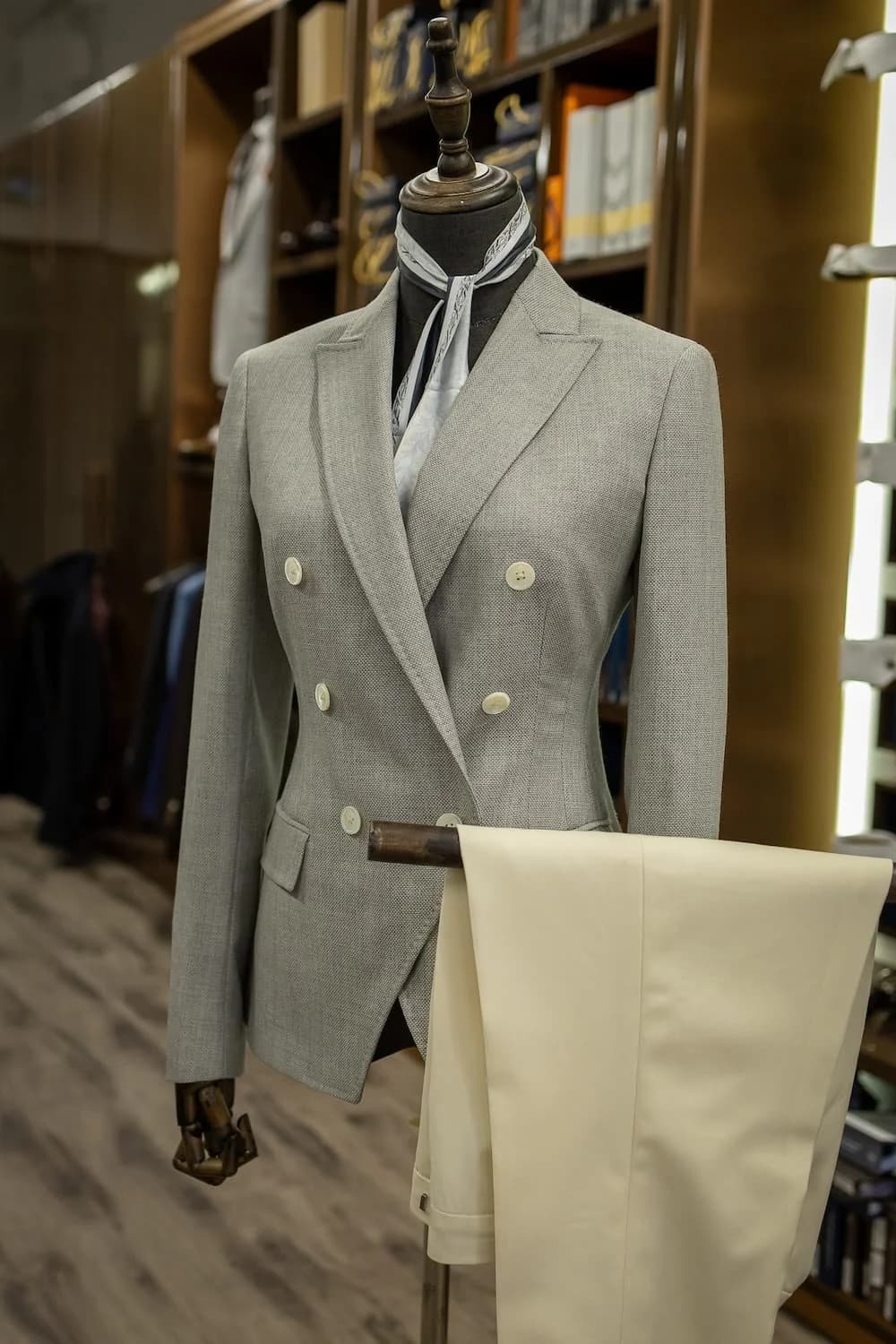
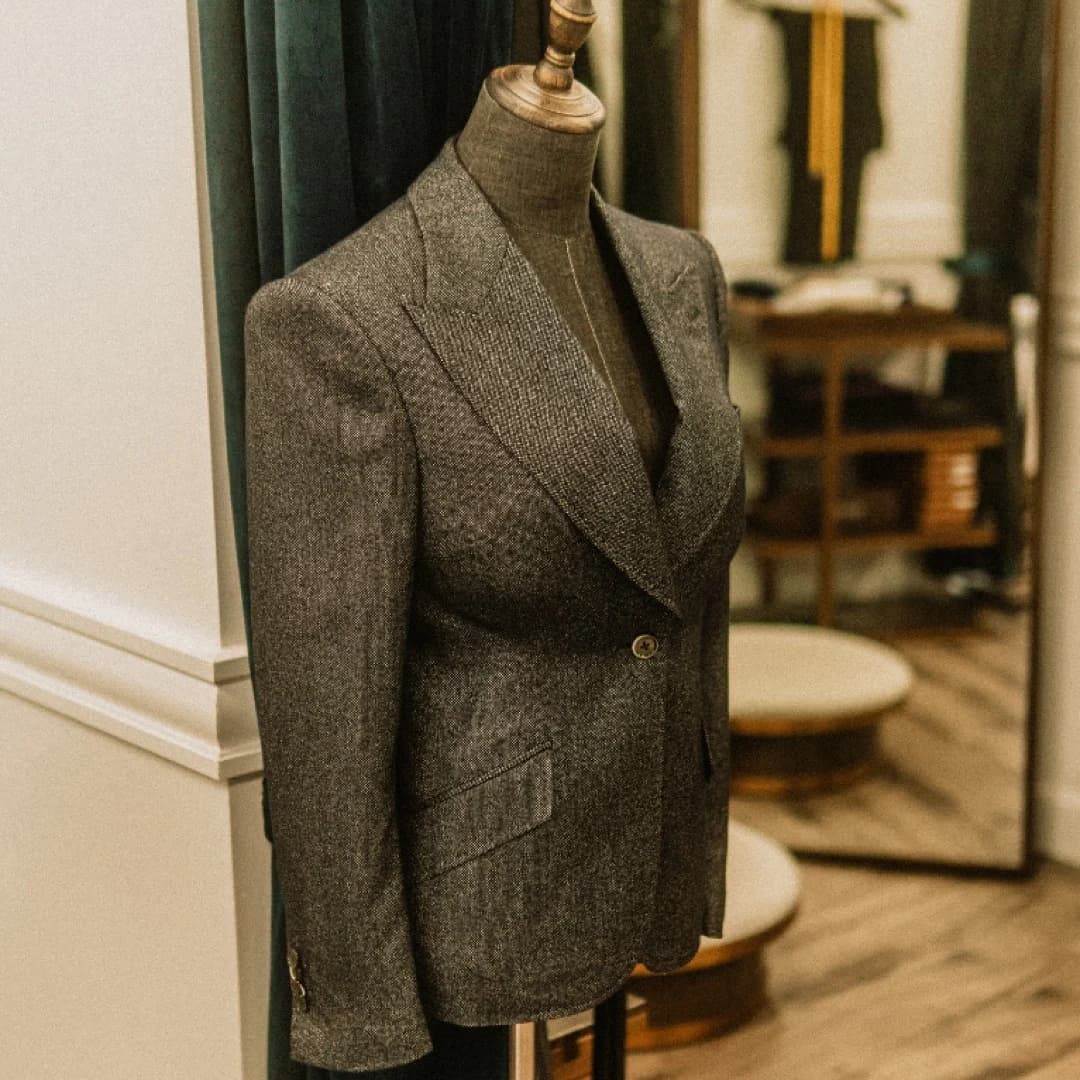
The shoulder makes a noticeable difference. The bench-made blazer at the top of this article has a strong, roped pagoda shoulder: the line curves upwards towards the sleeve, with a raised edge where the sleeve meets it. That gives the jacket a deliberate shape. If you prefer a quieter shoulder, we can discuss that too.
With trousers, think about where you like the waistband to sit and how much room you want through the hip and leg. With a skirt, think about length and room to walk and sit. Bring the shoes you expect to wear so we can consider the hem with them.
Feel the cloth before you decide
We have cloth collections selected for womenswear, and I’d encourage you to take your time with them. Hold a piece up, feel its weight and see how it falls. A soft, fluid cloth and a firmer one will behave differently in the same jacket shape.
Tell us if you run warm, travel often or expect to wear the suit several days a week. We’ll discuss how the cloth suits that use, alongside the colour and texture. If you’re drawn to something delicate, ask what looking after it will involve. You should know that before you decide.
A detail worth making your own
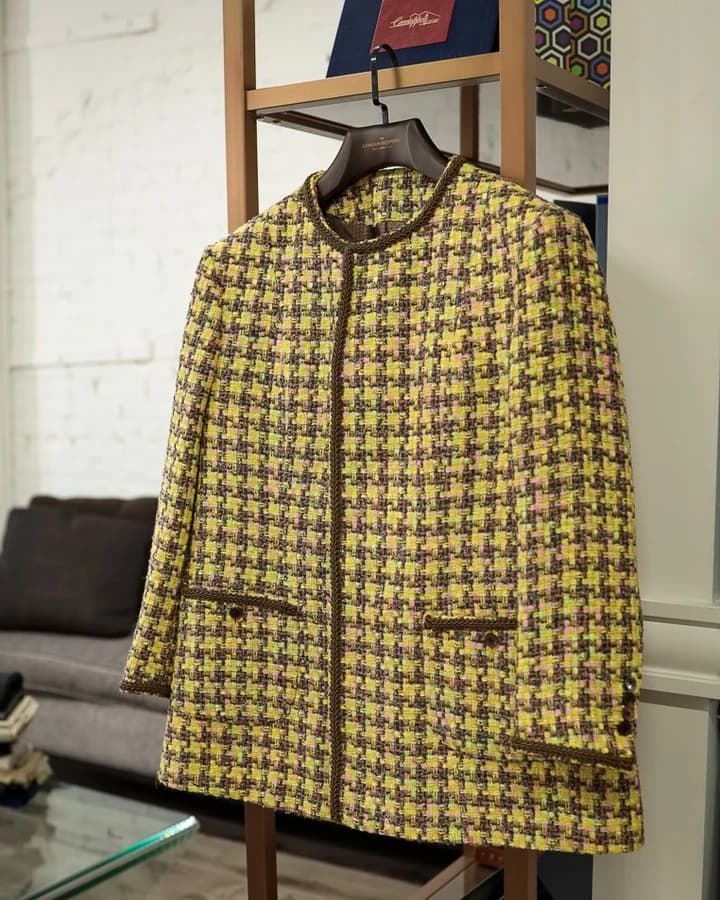
We made this jacket with a matching skirt in Holland & Sherry bouclé, finished with silk trim handwoven in Japan. The jacket takes its cue from the classic Chanel style. The trim follows the neckline, front and pockets, picking up the darker tones in the cloth.
If you have an image saved, show us what you like about it. It might be the collar, the pockets or the way a jacket sits over a skirt. That gives us something specific to work from. You can enjoy choosing the details without needing to design the whole garment yourself.
Tell us how it feels at the fitting
At The London Bespoke Club, your suit starts with an individual pattern, drafted for your measurements, proportions and posture. Our women’s patterns aren’t adapted from a menswear block. We record the adjustments made at your fittings and update your pattern as we go.
The first fitting is a basted fitting. You try on the garment while it is held together with temporary stitching, so we can work on the shape before it is finished. Sit down, move your arms and stand as you normally would. Wear the kind of blouse, shirt or layer you intend to have underneath.
Say if something feels tight or unfamiliar, even if it looks fine in the mirror. We can discuss whether it needs adjusting. This is also the time to mention a pocket you find awkward or a length you’re unsure about. You’re the person who has to enjoy wearing it.
Budget and time to allow
Our women’s semi-bespoke suits start from $1,800, and our bench line starts from $5,795. Your cloth and the commission you choose determine the final price. Tell us the budget you’re comfortable with so we can show you suitable options.
For most clients, I’d suggest starting with semi-bespoke. It follows the same approach to an individual pattern and your style and fit requirements as our bench line. A production environment and substantially less handwork make it quicker to produce. Allow around 10 weeks for a first suit, with typically two fittings, beginning with a basted fitting.
Our in-house cutter and tailor, Ian MacMillan, makes the bench line at our Toronto atelier. There is considerably more handwork in the making, with four to five fittings over approximately four to five months. Both women’s suit programmes use half-canvas construction, which supports the upper part of the jacket.
If you have a date in mind, tell us at the first conversation. We’ll confirm the schedule and explain the differences before you choose. Once your pattern is established, a subsequent semi-bespoke commission typically takes around five weeks, with any changes in fit discussed again.
Compare semi-bespoke and our bench lineThink about what goes over it
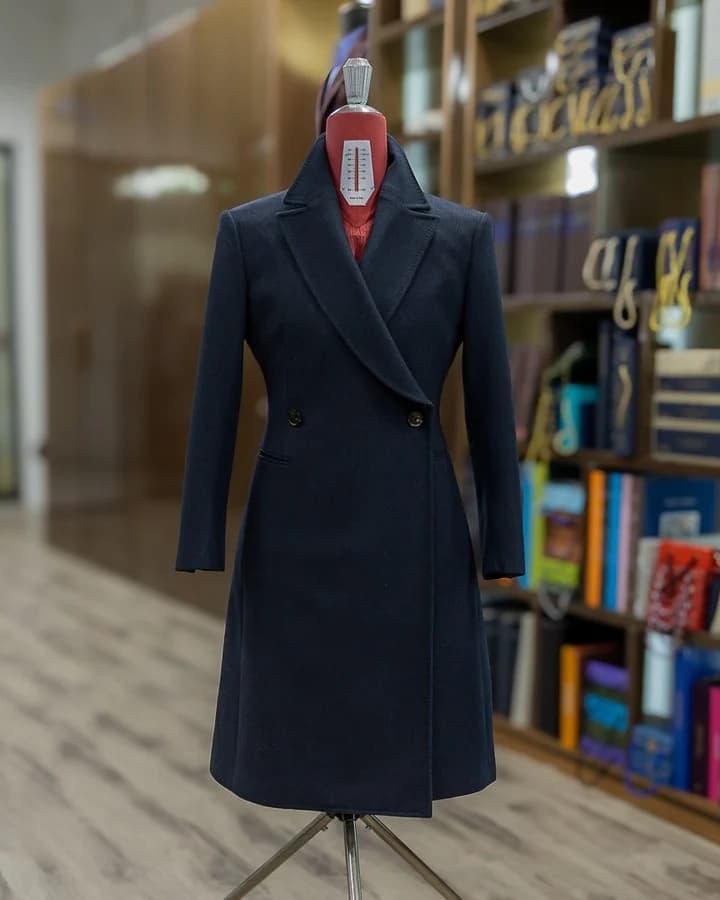
If you’ll wear a coat over the suit, bring that into the conversation. It needs enough room for the jacket beneath it, especially through the shoulders and sleeves. You can bring a coat you already own to a fitting.
The overcoat below is one we made in Loro Piana Storm System cloth, with navy herringbone outside and burgundy on the reverse. We left it unlined to show that reverse. It’s a useful example of how cloth choice and construction can work together on a separate piece. You can build a wardrobe a piece at a time.
Come in with a few ideas
If possible, bring a jacket or trousers you enjoy wearing, even if there are things you’d change. If you don’t have anything you like, come prepared to tell us how you want your clothes to fit. A few saved photographs can help too.
Our dedicated womenswear team will sit down with you, look through cloth and talk about what you’d like to have made. Consultations at our Toronto atelier are complimentary and strictly by appointment. You can work out the details with us when you come in.
Book an appointment