Womenswear / Tailoring
The London Bespoke Club · Toronto5 min read
From the Journal
Women’s suits for work. More ways to wear them.
Start with the clothes you reach for most. My advice on useful separates, planning outfits and deciding what to add next.
At a glance
- Work out how often you need a full suit. A jacket and separate trousers may be more useful for the rest of your week.
- Choose colours alongside clothes you already own, and plan a few complete outfits before commissioning another piece.
- Spend on the garments you’ll wear most. Add to the wardrobe once you know what gets used and what is missing.
In this story
Before adding another suit, I’d look at what happens when you get dressed for work. Which trousers are always in use? Is there a jacket you keep putting on and taking off because it doesn’t work with anything? Are you buying for your usual week, or for a meeting that happens twice a year?
Those answers help you decide where to spend. A useful working wardrobe can be quite small if the pieces work together. I’d rather help you add something you’ll reach for regularly than another complete outfit that only makes sense on its own.
How often do you need the whole suit?
If you wear a full suit most days, start there. Think about having enough options to rotate, rather than asking one suit to do everything. If you only wear one for presentations or client meetings, consider how you’ll use the jacket and trousers separately on other days.
You may find that a separate jacket is the better first purchase. If your existing trousers fit well and you enjoy wearing them, bring them in. We can look for a jacket to go with them. There’s no need to replace clothes that are already doing their job.
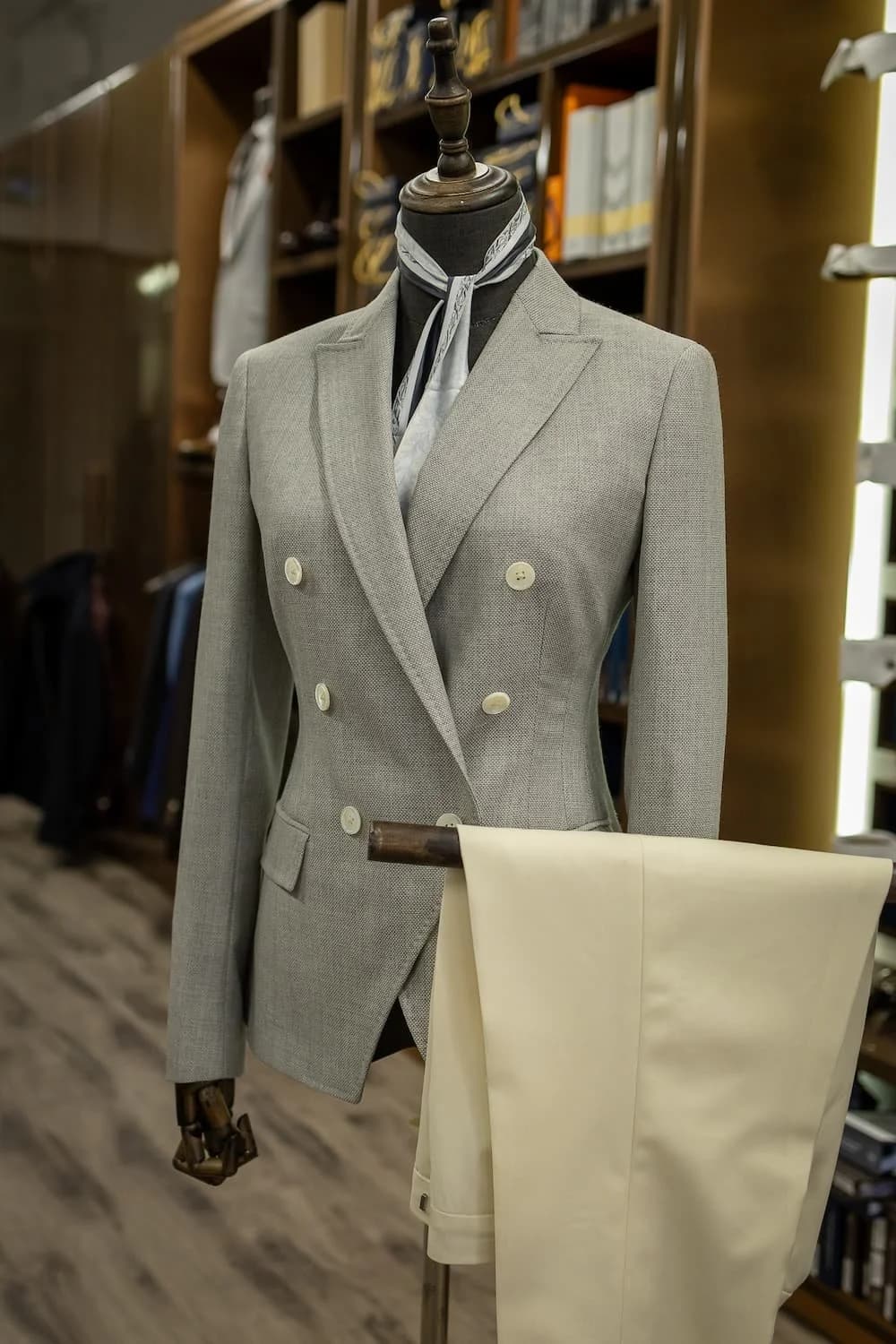
The grey jacket and ivory trousers at the top of this article are an example of dressing with separates. The colours are deliberately different, so they look like a considered pairing rather than an attempt to match two almost-identical cloths.
Plan a few outfits before choosing the cloth
Pick the shoes, shirts and knitwear you wear most, then look at cloth alongside them. A jacket that works beautifully with one blouse is less useful if you have nothing else to put under it.
For example, if you were commissioning a navy trouser suit, I’d want to talk through a few ways you might use it:
- The complete suit with a shirt for the days you want to dress more formally.
- The trousers with a fine knit and your usual flats when you don’t need the jacket.
- The jacket with contrasting trousers, or jeans if that suits your workplace.
Colour you already enjoy wearing
Navy and grey are useful starting points, but they aren’t a rule. If you’ve worn green for years and know what you like with it, that may be a more sensible choice than a navy suit you feel obliged to buy.
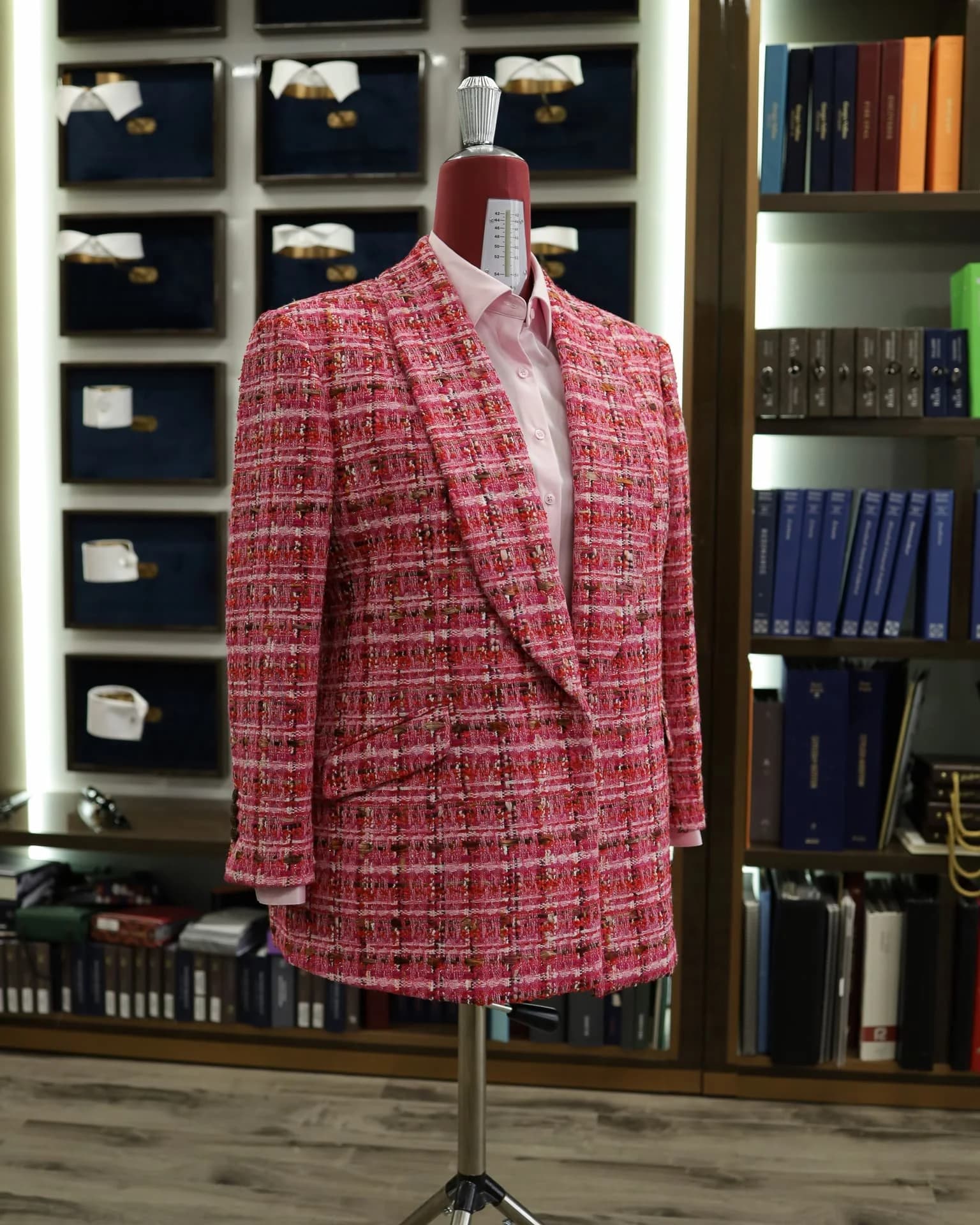
With a patterned jacket, pick out one of its colours for the shirt or trousers. The pink jacket-and-skirt outfit below is shown with a pale pink shirt. If you wanted to wear that jacket separately, we could put plain trouser cloths beside it and see which combinations you like.
Shop for longevity, but don’t confuse that with buying everything in the quietest colour. What matters is whether you can see yourself wearing it often, with clothes you already enjoy.
Tell us what a working day involves
A day at a desk, a train journey and a day spent moving between appointments ask different things of your clothes. Tell us how you get to work, whether the office is warm or cool, and how often you travel. That is more useful than choosing a cloth because it has the softest feel in the book.
Ask how a cloth handles regular wear and creasing, and what looking after it involves. If you’re tempted by something delicate, we can discuss whether it belongs in your everyday rotation or in a jacket you wear less often. There’s room for both; it helps to know which you’re buying.
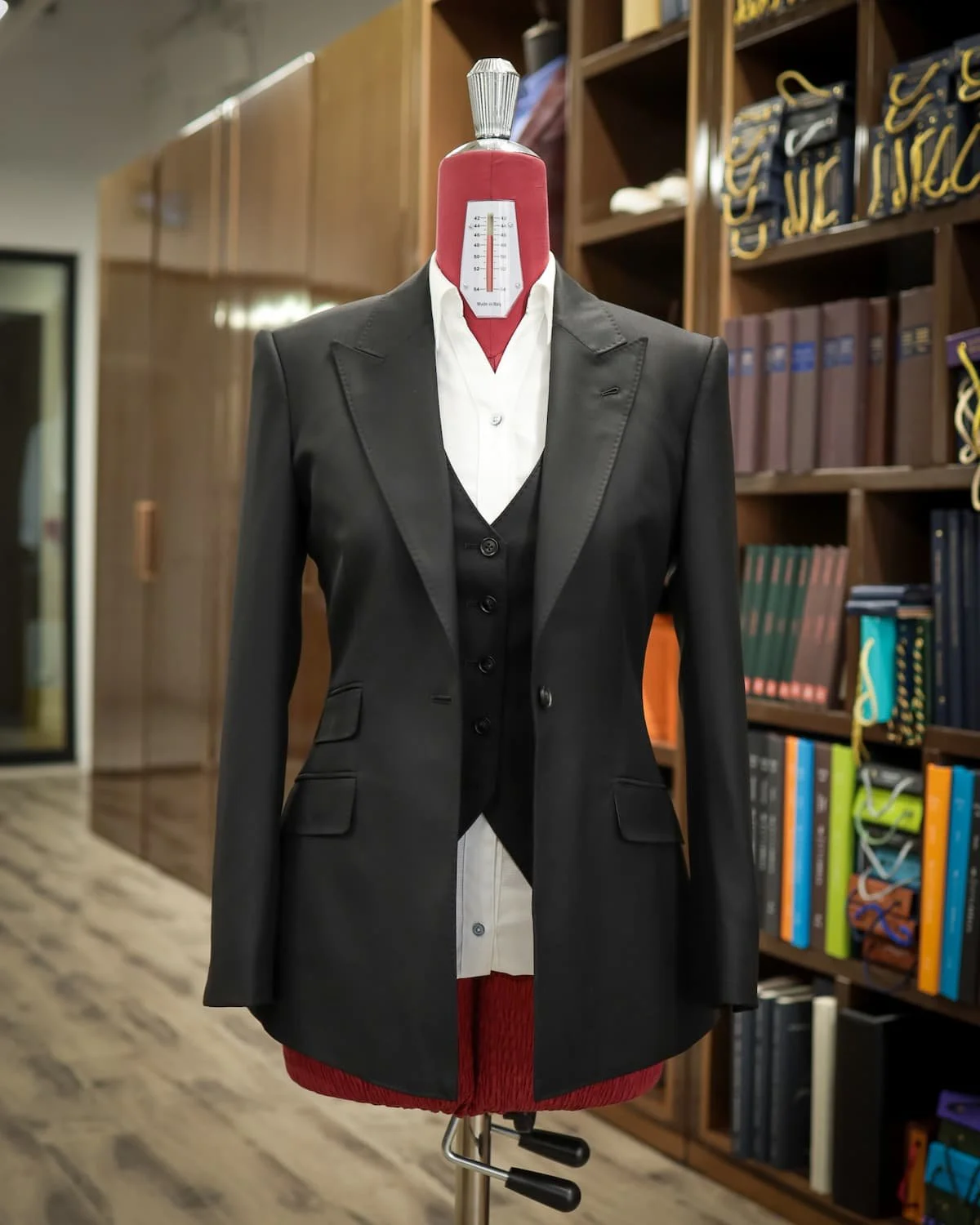
Layers deserve a thought too. If you take your jacket off at your desk, make sure you like the outfit underneath. A waistcoat is another option if you enjoy wearing one, as shown below. It is an extra piece to consider, rather than something every working wardrobe needs.
Try it as you’ll wear it
At the fitting, take a seat and reach forward as you would at your desk. Try the pockets with whatever you expect to carry. If you keep your phone in a trouser pocket, we should know that before deciding on its position and size.
Wear your usual work shoes and bring the layers you’ve planned. A jacket needs to work over those clothes, and a trouser hem chosen with heels may not suit the flats you wear on your commute. Tell us if you switch between the two so we can discuss a sensible length.
For a skirt, walk and sit in it. For trousers, pay attention to the waistband when seated. These are ordinary movements, but they tell us far more about a work outfit than standing still in front of a mirror.
Buy the next piece when you know you need it
You don’t have to commission a whole wardrobe at once. Start with the gap that bothers you most, wear the new piece, and see what would make the next addition useful.
If the trousers will get far more wear than the jacket, ask about a second pair when you order. If you might want a matching skirt later, mention that too. We can check the cloth requirements at the start; don’t assume exactly the same cloth will still be available when you return.
Tell us your overall budget, including any shirts or other pieces you’re considering. It helps us weigh up where the money will make the most difference. Cost per wear comes down when you’re using what you’ve bought, not when you’ve simply bought more.
Your first women’s suit: prices, fittings and the making processBring us the pieces you want to work with
For your appointment, bring a couple of garments you wear regularly, or photographs of them. A short list of what is missing is helpful too: a jacket for meetings, trousers to wear with knitwear, or a suit you can take on work trips.
Our womenswear team will help you put the options together at The London Bespoke Club’s Toronto atelier. Consultations are complimentary and strictly by appointment. We can start with one useful piece.
Book an appointment